 |
| |
 |
|
| |
|
|
 |
 |
 |
| |
|
|
 |
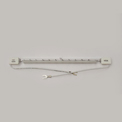
INFRARED HEATING : All bodies
above zero temperature (-273 deg.C) emit `infra-red' radiation
in the form of waves which pass through space and are partly absorbed
by bodies they strike. This radiation forms a part of the electro-magnetic
spectrum and has the strongest heating effect of all.
Infrared radiation behaves in a manner similar to visible light
as far as transmission, reflection or absorbtion are concerned.
Infrared radiation does not rely on any intervening medium to
transfer heat from the infrared source to the object being heated.
The wavelength of infrared-radiation is expressed in microns.
The wavelength range is from 0.76 microns to 1mm and covers shortwave
IR, medium wave IR as well as longwave IR.
|
 |
| |
|
|
| |
|
|
| |
ADVANTAGES
OF INFRARED HEATING |
|
 |
 |
 |
| |
|
|
| |
EFFICIENT : |
Precise targeting and control is possible with minimal
peripheral heat |
|
| |
|
loss. It is possible to apply heat only where and when it is required. |
|
| |
|
|
|
| |
EFFECTIVE : |
Very high rates of heat transfer can be obtained. |
|
| |
|
|
|
| |
RAPID : |
Energy is transmitted at the speed of light from the element to
the product. A constant rate of heating is obtained because the source
temperature is normally much higher than that of the product even
at theend of the heating cycle. |
|
| |
|
|
|
| |
CLEAN : |
No products of combustion. No forced air currents to convey contaminants
to the product. |
|
| |
|
|
|
| |
|
|
|
| |
CONSTRUCTION OF HI-HEAT CERAMIC
INFRARED HEATER |
|
 |
 |
 |
 |
| |
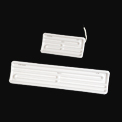
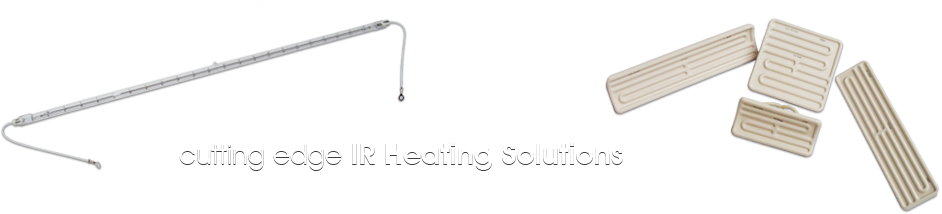
By design, a coiled heating element
of Nickel-Chrome alloy is embedded in a glazed ceramic body, which
gives protection against thermal shock and prevents attack by atmospheric
oxygen. The refractory material has a high emissivity value in the
region of 0.9 which approaches the ideal black body conditions required
for efficient radiation. The Ceramic Infrared Heating Elements emit
energy with peak emission wavelengths between 3.3 microns to 5.7
microns. |
|
| |
|
|
| |
MAIN APPLICATIONS |
|
 |
 |
 |
 |
| |
Pre-heating of plastic sheets for
vacuum forming & thermoforming, drying paints, lacquer &
vanish curing, drying printing inks, drying textiles, activating
adhesives, removing surface water from objects or moisture removal
from fabric and paper, animal husbandry and rearing. |
|
| |
|
|